A Saturday market stall and a farm shop shelf can hold the same bag of carrots, grown in the same Suffolk field, and still suit completely different weeks. One opens for a few hours and then vanishes. The other is there on a wet Tuesday when you have run out of milk. Choosing between them isn't really a contest — it's about knowing what each does well, so you spend less and eat better.
What you're actually comparing
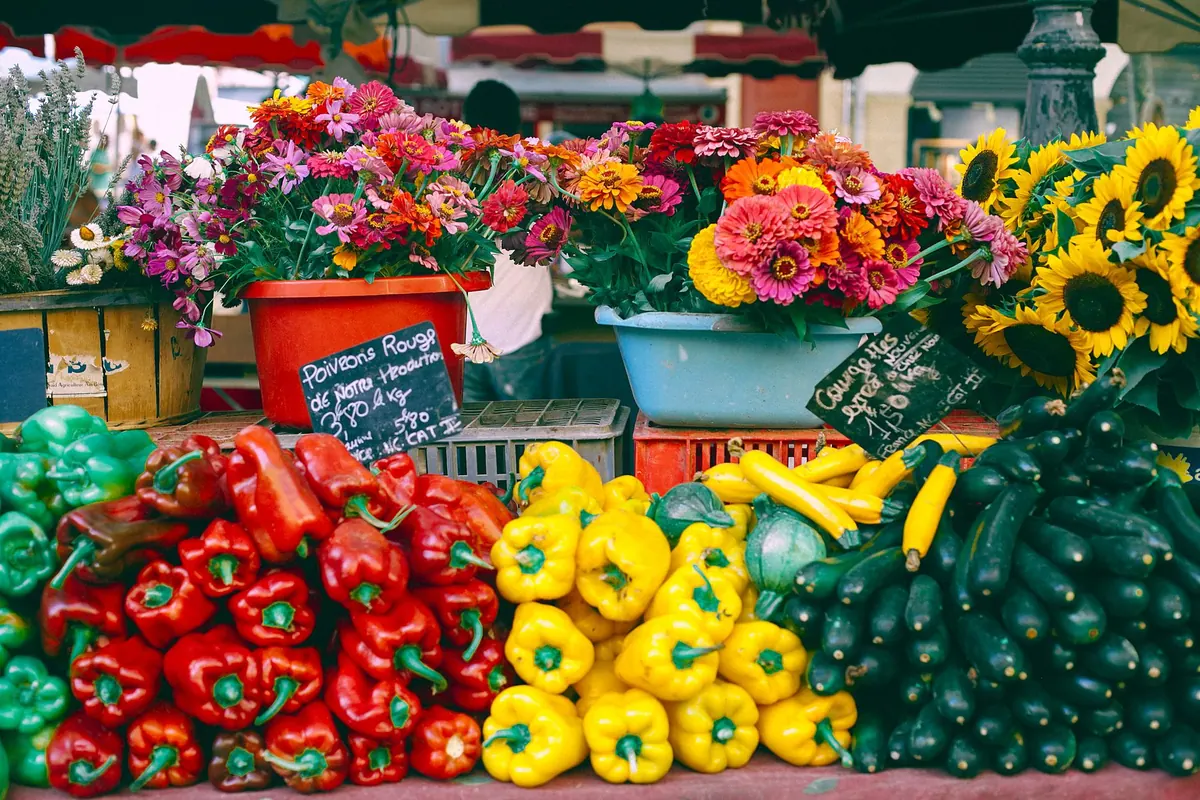
A farmers' market is an event. Producers, or people who work for them, set up stalls in a town square, a market place or a village hall for a few hours, usually once or twice a month. Most in Suffolk run on a Saturday morning, though some towns hold theirs on a Friday or Sunday, and a few run fortnightly. You buy what is on the table that day, from the person who grew or made it, and by early afternoon the square is empty again.
A farm shop is a shop. It has walls, a till, opening hours and stock levels that don't depend on the weather. Some are attached to the farm that supplies them; others are run as shops first, gathering produce from growers and makers within a sensible radius. Either way, the point is availability — the same counter on Wednesday as on Saturday.
Prices: the market usually wins, with caveats
Markets tend to be cheaper on the things that matter most in season — courgettes in August, greens in spring, eggs, bread, jam. There are no shop rates, no chiller running all night for produce picked yesterday, and no middleman between the grower and your bag. That saving often shows up at the till.
Farm shops carry higher overheads: staff, heating, refrigeration, insurance, parking. That is reflected in prices, though not always as much as people assume. Where farm shops compete is in bulk and in cuts. A tray of eggs, a half-lamb box, a sack of potatoes, a whole cheese — bought that way, the price per kilo can undercut both the market and the supermarket. Look for "wonky" or "glut" boxes near the door, which exist to move produce quickly.
Two honest points. Neither is automatically cheaper than a supermarket for staples, and both ask you to pay for freshness and traceability rather than volume. Prices also move with the season, so a figure you remember from last summer may not hold. Compare like with like: same weight, same cut, same week.
Freshness and seasonality
At a market, freshness is the whole pitch. Salad leaves and soft fruit are often picked the day before, sometimes the morning of. Berries smell of berries. Carrots still have soil on them.
Not every stall grows everything it sells, though. Some traders buy in from wholesale markets to fill a table, which is legal and normal but not the same thing as a farm gate. Ask. A good stallholder will tell you which items are theirs and which were brought in, and where from.
If nobody at the stall can tell you roughly where the potatoes came from, that tells you something useful.
Farm shops vary more. What is grown on site may be harvested that morning; other lines may have travelled further and sat in a chiller for a week. Turnover matters as much as the label. A busy farm shop with a fast-moving vegetable section will beat a quiet one with a tired display every time.
Opening times and reliability
The biggest practical difference is when you can actually shop.
- Farmers' markets: limited hours, often four to six hours on one day a month or fortnight. Popular items can sell out by mid-morning, and heavy rain can thin out the stalls.
- Farm shops: fixed, predictable hours, usually six or seven days a week and often longer in summer. Reliable for a midweek top-up or a late-afternoon dinner rescue.
Write market dates in your diary or check the week before. A surprising number of people drive into towns like Sudbury or Stowmarket and find the square quiet because they have mixed up the week.
Convenience, parking and the weekly shop
Markets ask more of you. You park wherever the town allows, carry bags between stalls, and juggle a wallet while holding a bunch of chard. In return you taste before you buy, ask how to cook something, and cover meat, cheese, bread, fish and vegetables in one loop if the market is a decent size. Take cash as a backup — most traders now take cards, but signal in a packed square is not guaranteed.
Farm shops are easier in almost every way: one car park, one till, trolleys, toilets, and often a café, a butcher counter and a deli under the same roof. That convenience is exactly what you are paying for. The trade-off is distance — a farm shop ten miles away is a ten-mile trip every time, while the market may sit on your route home from work.
So which is better?
They solve different problems. Use the farm shop for the backbone of the week: milk, butter, eggs, meat, the things you need on a Tuesday. Use the market for what is at its peak, for the bulk buy that becomes a batch of tomato sauce, and for the conversation that tells you what to do with a vegetable you would never normally pick up.
If you cook seasonally and plan meals around what is available, the market will stretch your money furthest. If your week is unpredictable, the farm shop will save you from a supermarket trip more often than it costs you.
Making it work: a routine worth copying
- Confirm your dates. Town and parish noticeboards, the market's own social pages and local Facebook groups are the quickest places to check which Saturday applies.
- Shop early for choice, late for bargains — but accept that the best stalls may be cleared by noon.
- Take a list, your own bags and a cool bag in summer. Impulse buys are half the pleasure and half the overspend.
- Ask two questions at any stall: where was this grown or reared, and when was it picked or made? Vague answers are information too.
- Buy staples and store-cupboard items at the farm shop, and gluts at the market. Freeze, pickle or sauce them the same day.
- Set a rough limit before you go rather than at the third stall. Local food is worth paying for, but it is still spending.
If money is genuinely tight, or you are juggling debt, a free session with a debt advice charity will help you more than any shopping tip on this page.
Then try one month of both. Do the main shop at the farm shop on a weekday and spend a tenner at the market on Saturday, on whatever looks best. You will quickly learn which one suits your kitchen — and you will probably keep both.
Photo: Maria Orlova / Pexels